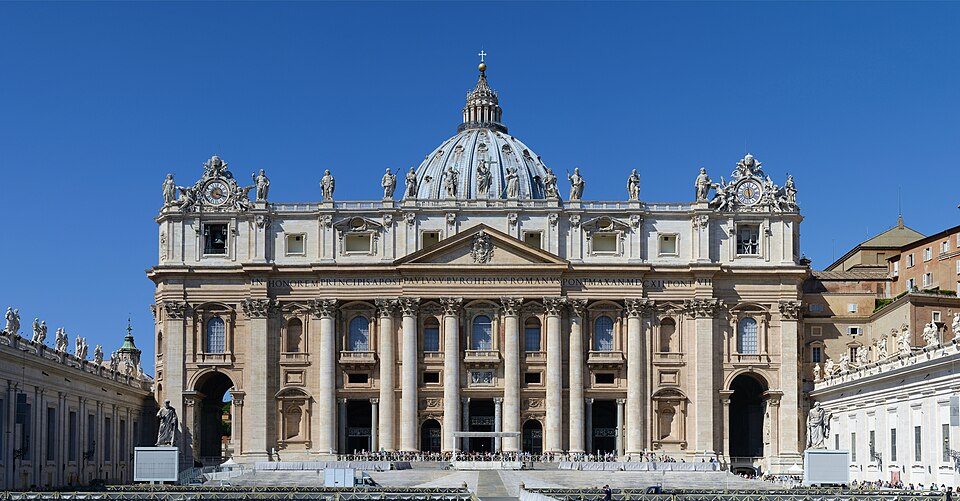
Michelangelo
Who
Sculptor, painter and architect, born in Caprese near Florence in 1475 and dead in Rome in 1564. Carved the Pieta and the David before he was thirty, painted the Sistine Chapel ceiling between 1508 and 1512 and the Last Judgment between 1536 and 1541. He thought of himself as a sculptor first.
Why they matter
He made the human body carry everything: faith, power, strain, despair. The David and the Sistine ceiling fixed the idea of the heroic nude for every artist who came after. Even his one surviving finished panel painting, the Doni Tondo, looks carved: its figures come from his study of Hellenistic marble sculpture.
What to buy
Prints: no museum shop we could confirm prints his work to order, and the frescoes and sculptures can only ever be reproduced from photographs, so a generic poster tells you little about its source. The better wall picture is a drawing: the Met's red-chalk Studies for the Libyan Sibyl, drawn from a male model for one of the ceiling figures, is a sheet of paper to begin with, so a reproduction of it loses far less than a photograph of a ceiling does. Books: Taschen's Michelangelo. Paintings, Sculptures and Architecture by Christof Thoenes and Frank Zollner covers the whole career in a compact 600-page hardback, with a special focus on the Sistine frescoes; it is the cheapest honest way to own the lot. Originals: not realistic. His one finished panel painting to survive is in the Uffizi, and his drawings are in museums.
Notes
The Doni Tondo in the Uffizi, painted for the Florentine merchant Agnolo Doni, is the only finished panel painting by Michelangelo to survive; its carved frame is thought to be of his design. The David has stood in the Galleria dell'Accademia since 1873, having first been set up outside the Palazzo della Signoria in 1504. The Pieta, the only work he is known to have signed, was attacked with a hammer in 1972, restored, and now sits behind acrylic glass.
Story
The David was carved from a block other sculptors had given up on. In 1464 the cathedral workshop in Florence commissioned Agostino di Duccio to carve a David from a huge piece of marble; he roughed out the torso, legs and feet and abandoned it around 1466. Antonio Rossellino was engaged to carry on in 1476, and that contract was cancelled too. For the next twenty-five years the expensive block lay on its back in the cathedral yard, exposed to the weather. An inventory of 1500 described it as "a certain figure of marble called David, badly blocked out and supine." On 16 August 1501 the job went to Michelangelo, then twenty-six, who had to work within what the others had already cut away. The statue he finished in 1504 stands 5.17 metres tall. It had been meant for the roofline of the cathedral, but in June 1504 it was installed in front of the Palazzo della Signoria instead, where it stood until 1873, when it was moved to the Galleria dell'Accademia.
Key works
- Pieta (1498-1499) - St Peter's Basilica, Vatican City
- David (1501-1504) - Galleria dell'Accademia, Florence
- Holy Family (Doni Tondo) (1505-1506) - Uffizi, Florence
- Sistine Chapel ceiling (1508-1512) - Sistine Chapel, Vatican City
- Studies for the Libyan Sibyl (1511) - The Met, New York
In museum collections
- Madonna of Bruges (1503)
Art UK ↗ · Find a print ↗ - Doni Tondo (1500)
Uffizi ↗ · Find a print ↗ - Dying Slave (1514)
Louvre ↗ · Find a print ↗ - The Entombment (1500)
Art UK ↗ · Find a print ↗ - Rebellious Slave (1514)
Louvre ↗ · Find a print ↗ - Manchester Madonna (1494)
Art UK ↗ · Find a print ↗ - Taddei Tondo (1504)
Art UK ↗ · Find a print ↗ - Study of a Kneeling Nude Girl for The Entombment (1500)
Louvre ↗ · Find a print ↗ - Bozzetto for the Young Slave (1519)
V&A ↗ · Find a print ↗ - Studies for the Libyan Sibyl (1511)
The Met ↗ · Find a print ↗ - Adam et Eve chassés du Paradis et marchant
Louvre ↗ · Find a print ↗ - Etude de la partie inférieure d'un homme nu
Louvre ↗ · Find a print ↗
See the work
Prints
Books
See also
Browse all 2,101 artists · Open in the directory · Where the work hangs: 48 museums on a map