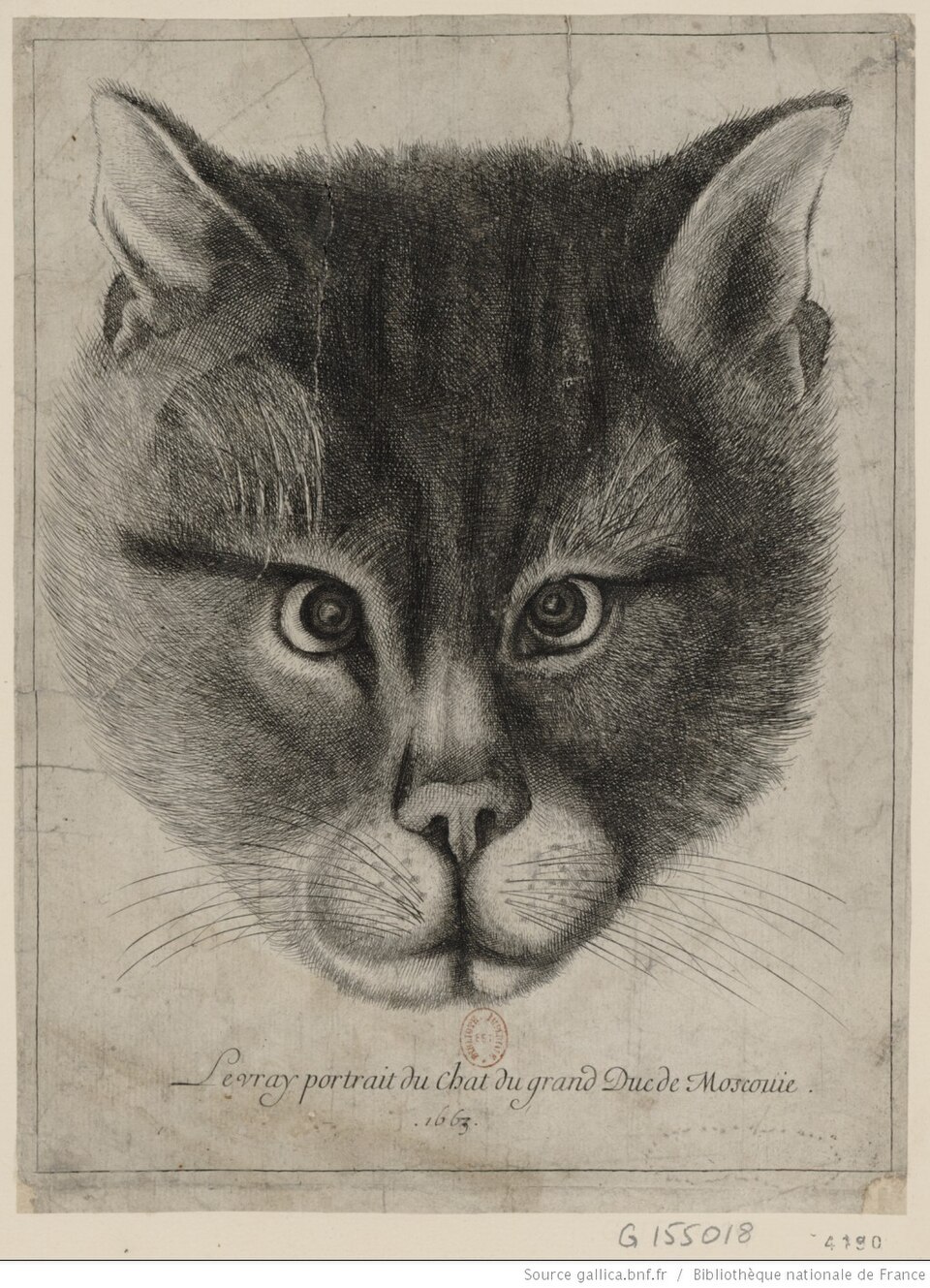
Wenceslaus Hollar
Who
Etcher, born in Prague on 13 July 1607, who died in London in March 1677. The Earl of Arundel took him into his service in 1636 and brought him to England in 1637; apart from a spell in Antwerp in the 1640s, he spent the rest of his life in London, etching views, maps, portraits, costume and book illustrations.
Why they matter
He is the eye of seventeenth-century London. His Long View from Bankside, his views of the Thames, his plates of old St Paul's and his views of the city after the Great Fire record a London that burned, and Hind found his buildings more accurate than those of the earlier Visscher view he may have started from. His small still lifes of fur muffs show what the etching needle can do with texture better than almost anything else in the medium.
What to buy
Originals: Richard Pennington's catalogue lists 2,717 prints, so genuine seventeenth-century Hollars come up constantly, and many small views, costume plates and book illustrations are the affordable tier of old-master printmaking. The catch is the date of printing. His contemporary publishers were Peter Stent (about 1643-1667) and his successor John Overton (about 1667-1703), whose addresses on a print usually mean a good early impression; but Henry Overton's name appears on Hollar plates as late as 1742, and, as Arthur Hind warned in 1922, a considerable number of plates were printed in large numbers long after Hollar's death. Hind's advice still holds: the quality of impressions varies enormously, so do not judge him by the late ones, and look for early ones. Ask who published the sheet and what state it is, and compare it with the museum impressions online before buying. His book plates, such as the St Paul's views for Dugdale (1658), were issued in those books, so a leaf should come with its book's title and date. A flat sheet with no plate mark is a reproduction. Books: Pennington's A Descriptive Catalogue of the Etched Work of Wenceslaus Hollar 1607-1677 (Cambridge University Press, 1982, reprinted since) is the standard catalogue. Hind's Wenceslaus Hollar and his Views of London and Windsor (1922) is out of copyright and free to read online.
Notes
The largest collections are in the British Museum, the Royal Collection at Windsor, the University of Toronto, which has put its collection online, and the National Gallery Prague. The Met and the Art Institute of Chicago have good selections online.
Story
In 1658 Hollar etched old St Paul's for William Dugdale's History of St Paul's Cathedral: the outside from every side, the interior, the chapter house and plans of the crypt. Eight years later the Great Fire of 1666 swept through the City, and those plates became a record of a medieval cathedral that no longer existed. Hollar etched the burnt city too, in views of the ruins that went onto maps and surveys. In 1668 he sailed to Tangier with Lord Henry Howard to draw the town and its fortifications, and on the voyage home his ship, the Mary Rose, was attacked by Algerian pirates; he etched the fight for John Ogilby's Africa of 1670. Samuel Pepys, John Evelyn and John Aubrey admired him, and none of it made him rich. He worked by the hour, exactly, and his publisher Stent paid him far less than his plates were worth. When he died in March 1677, bailiffs were executing a judgment in his house, and the one thing he is recorded as asking was that he not be moved until he was buried. He left 2,717 prints, more than one a week for fifty years.
Key works
- London Viewed from the Thames at Milford Stairs (1643/44) - Art Institute of Chicago
- Diversae Insectorum Figurae (after 1644) - Art Institute of Chicago
- Long View of London from Bankside (1647) - etched in Antwerp
- Muffs and Articles of Clothing on a Table (1647) - The Met
- Plates of Old St Paul's for Dugdale's History of St Paul's Cathedral (1658)
In museum collections
- Albury (1645)
National Gallery of Art ↗ · Find a print ↗ - Mulier Generosa Anglica (1642)
National Gallery of Art ↗ · Find a print ↗ - Richmond Palace (1640)
Art UK ↗ · Find a print ↗ - Self-Portrait (1647)
National Gallery of Art ↗ · Find a print ↗ - Title Page (1635)
National Gallery of Art ↗ · Find a print ↗ - Antwerp Cathedral (1649)
National Gallery of Art ↗ · Find a print ↗ - Cologne (1635)
National Gallery of Art ↗ · Find a print ↗ - Mulier Argentinensis (1642)
National Gallery of Art ↗ · Find a print ↗ - Mulier Basiliensis (1644)
National Gallery of Art ↗ · Find a print ↗ - Mulier Diepana (1649)
National Gallery of Art ↗ · Find a print ↗ - Rudesheim (1632)
National Gallery of Art ↗ · Find a print ↗ - Strasbourg (1635)
National Gallery of Art ↗ · Find a print ↗
See the work
Prints
Books
Originals
See also
Browse all 2,101 artists · Open in the directory · Where the work hangs: 41 museums on a map